

The Hidden Mechanics of a Slab Leak Before the Water Bill Spikes
The Invisible Threat Beneath Your Foundation
You might notice a faint hissing sound in the hallway at night, or perhaps a single tile on your bathroom floor feels unusually warm to the touch. If you are researching the hidden mechanics of a slab leak before the water bill spikes, you are already one step ahead of a potentially devastating plumbing failure. Most homeowners assume that a broken pipe will immediately flood the house or trigger a massive utility bill. However, water behaves very differently when trapped beneath a heavy concrete foundation. A deteriorating supply line can leak silently for weeks or even months, causing hidden structural stress long before the evidence reaches the surface.
Recognizing the subtle, early physical signs of sub-slab water movement is crucial for preventing catastrophic foundation damage. By understanding how water moves and interacts with your home’s infrastructure, you can confidently call a professional for professional plumbing services before the situation escalates. One of the most reliable early warning signs you can look for is continuous movement on the water meter’s low-flow leak indicator when all fixtures are off. This simple observation transforms a vague suspicion into concrete mechanical proof, allowing you to take action while the problem is still manageable.
The Physics of Sub-Slab Water Movement
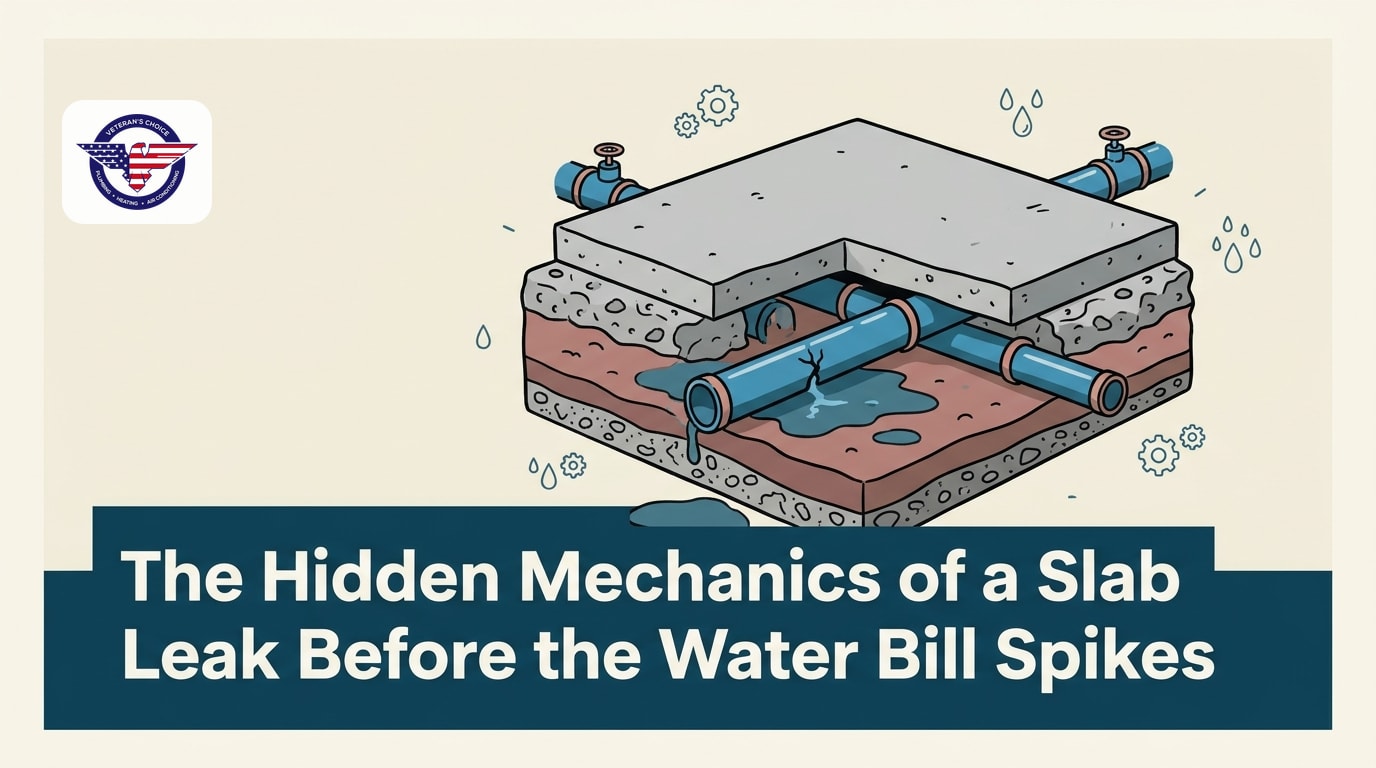
To understand why a slab leak is so difficult to detect, you have to look at the science of hydrostatic pressure. When a pipe deteriorates under a concrete slab, the escaping water rarely surfaces directly above the source of the leak. Instead, the water is trapped between the dense, compacted soil below and the rigid concrete foundation above.
Hydrostatic pressure forces this escaping water to seek the path of least resistance. In a residential plumbing system, this path is almost always the trench that was originally dug for the pipes during construction. Because the soil in this trench is slightly looser than the surrounding undisturbed earth, water can channel dozens of feet away from the actual break. As the water pools in the soil, it creates upward pressure against the rigid concrete, eroding the sub-base invisibly.
| Leak Characteristic | Above-Ground Plumbing Leak | Sub-Slab Plumbing Leak |
|---|---|---|
| Water Behavior | Follows gravity, dripping downward onto visible surfaces. | Channels laterally along pipe trenches due to hydrostatic pressure. |
| Detection Time | Usually immediate; visible pooling or drywall damage occurs quickly. | Delayed; can take weeks or months to surface through concrete. |
| Damage Pattern | Localized water damage to drywall, cabinetry, or flooring. | Widespread sub-base erosion and potential foundation heaving. |
This channeling effect explains the significant delay between a pipe failing and the water finally finding a microscopic crack to surface through. By the time you see a damp spot on your baseboards, the water has already saturated the soil beneath your home. This is why waiting for visible water is a dangerous strategy, and why checking for continuous movement on the water meter’s low-flow leak indicator when all fixtures are off is a much safer diagnostic approach.

How Environmental Stressors Shear Under-Slab Pipes
The Problem: Rigid under-slab plumbing is highly vulnerable to the natural heaving and settling of the ground beneath it. While concrete feels permanent and unyielding, the earth beneath it is in a constant state of motion. When the soil shifts, it takes the embedded plumbing infrastructure along with it.
The Cause: Environmental stressors play a massive role in this hidden destruction. For example, Southern California’s expansive clay soils swell significantly during heavy winter rains and shrink rapidly during prolonged dry spells. This dramatic cycle creates a continuous pattern of foundation heaving and settling. When the soil expands, it exerts immense physical pressure on rigid copper and PEX lines. The friction of the heavy foundation shifting against the relatively fragile plumbing infrastructure is a primary catalyst for undetected deterioration. Over time, this constant grinding and bending weakens the pipe walls, eventually causing pinhole leaks or joint failures.
The Solution: You cannot stop the earth from moving, but you can monitor the symptoms of the resulting friction. Because hot water lines expand and contract with temperature changes, they are especially prone to this shearing force. Homeowners who notice unexplained warm spots on hard surface floors from hot water line leaks are often witnessing the direct result of soil-induced pipe failure. Recognizing that your local soil conditions actively stress your plumbing helps you stay vigilant for these early warning signs.
Thermal Dynamics and the Warm Floor Phenomenon
One of the most fascinating physical reactions to a hidden slab leak involves thermal dynamics. Hot water lines are particularly susceptible to friction and deterioration because they undergo continuous thermal expansion and contraction every time you turn on a faucet or run the dishwasher. Over years of rubbing against rocky soil or concrete, these lines wear thin.
When a hot water line finally develops a pinhole leak beneath the slab, the thermal energy from the escaping water transfers directly through the wet, saturated soil and into the concrete foundation above. Concrete is an excellent thermal conductor. As the heat moves upward, it creates distinct temperature anomalies on the surface of your flooring. This localized heat transfer is often the very first physical indicator that something is wrong underground.
- Tile Flooring: Ceramic and porcelain tiles conduct heat efficiently, making thermal anomalies very obvious to bare feet.
- Hardwood Flooring: Wood will absorb the heat, and you may also notice slight warping or cupping as the moisture vapor rises.
- Laminate and Vinyl: These materials may feel unusually warm, and the adhesive beneath them may begin to release due to the thermal energy.
Hard surface materials conduct this heat so efficiently that they create a noticeable physical warning sign. If you experience unexplained warm spots on hard surface floors from hot water line leaks, it is a clear indicator of thermal energy transfer. The water may not have breached the surface yet, but the heat absolutely has.
Decoding the Low-Flow Leak Indicator
Before a monthly water bill spikes and causes financial panic, your municipal water meter provides the earliest mechanical proof of a hidden plumbing failure. The water meter is a highly sensitive diagnostic tool if you know how to read it. The low-flow indicator—often designed as a small red triangle, a spinning star, or a tiny gear on the face of the meter—is engineered to register even the slightest movement of water through your main supply line.
Monitoring this indicator provides objective, undeniable evidence to justify calling a professional for diagnostics. Here is how to perform this critical check:
- Isolate the home completely: Turn off every faucet, shower, appliance, and irrigation system on the property. Do not run the washing machine, and ensure no toilets are actively filling.
- Locate the municipal water meter: This is typically found in a concrete box near the street or sidewalk at the front of your property.
- Identify the low-flow dial: Carefully remove the meter lid and look at the main dial face. Locate the small indicator (the triangle or star) separate from the main numerical readout.
- Observe for continuous movement: Watch the indicator closely for at least three to five minutes. If you see continuous movement on the water meter’s low-flow leak indicator when all fixtures are off, water is actively escaping into the sub-slab environment.
- Document the evidence: Take a short video of the spinning dial. This confirms that the issue is a continuous pressure leak on the supply side, rather than a drainage issue.
Acoustic Anomalies: Listening for the Invisible
Water escaping a highly pressurized supply line creates distinct acoustic frequencies and physical vibrations. Because water is significantly denser than air, these sound waves travel incredibly efficiently through wet soil and the solid concrete foundation. The physics of sound transmission mean that a leak buried three feet underground can sometimes be heard clearly inside a quiet hallway.
Homeowners might notice a faint, continuous sound of running water even when all appliances and fixtures are turned completely off. This sound is often mistaken for a running toilet or a neighbor’s irrigation system. However, if the sound persists at all hours of the day and night, it is likely the acoustic signature of a sub-slab rupture.
Common acoustic signs of a hidden leak include:
- A faint hissing sound: Caused by high-pressure water forcing its way through a tiny pinhole in a copper pipe.
- A rhythmic thumping: Occasionally caused by water pressure fluctuating as it hits the surrounding concrete.
- The sound of a running stream: Occurs when a pipe has completely sheared, allowing a high volume of water to rush into the sub-base.
These acoustic signatures are exactly what professionals target when they arrive at your home. While human ears can only pick up the loudest leaks, confirming this sound alongside continuous movement on the water meter’s low-flow leak indicator when all fixtures are off gives you a definitive diagnosis that a hidden failure has occurred.
The Science of Precision Diagnostics and Resolution
The Problem: Because sub-slab water travels far from the actual leak source, guessing the location based on surface moisture guarantees unnecessary property damage. Tearing up hardwood floors or jackhammering concrete simply because a baseboard is wet is an outdated and destructive approach.
The Cause: Hydrostatic pressure forces the water to channel away from the broken pipe. If a technician cuts into the floor where the water is pooling, they might be ten or twenty feet away from the actual ruptured pipe.
The Solution: Modern diagnostics rely on advanced technology to pinpoint the exact failure point non-invasively. Working with a team that treats water leak detection as a disciplined, military-grade precision operation ensures that your home is protected. Veteran’s Choice brings honest, science-backed diagnostics—using acoustic amplification sensors, highly sensitive thermal imaging cameras, and safe tracer gases—to uncover leaks without unnecessary destruction. By mapping the unexplained warm spots on hard surface floors from hot water line leaks with thermal cameras, professionals can trace the heat signature back to its exact origin.
When to Consider Bypassing the Slab
Once the exact location of the hidden leak is pinpointed, homeowners face a critical structural decision: perform a localized spot repair or upgrade the severely degraded infrastructure. Spot repairs involve cutting a small section of concrete, fixing the immediate leak, and patching the hole. While this solves the current emergency, it leaves the rest of the aging, weakened pipe exposed to the exact same soil pressures and friction that caused the first failure.
In cases of widespread soil-induced shearing, bypassing the slab entirely is often the most structurally sound long-term solution. By rerouting the water lines through the walls or the attic, the plumbing is permanently removed from the hazardous, shifting sub-slab environment. This eliminates the risk of future foundation leaks and provides lasting peace of mind.
Frequently Asked Questions About Hidden Slab Leaks
Understanding the physics of sub-slab water movement can be complex. Before diving into the specific questions below, if you already know your home requires major infrastructure updates due to repeated leaks, exploring whole home repiping can provide a permanent solution that bypasses the foundation entirely.
Can a slab leak happen without a high water bill?
Yes, a slab leak can absolutely occur without immediately triggering a high water bill. Pinhole leaks in heavily corroded copper pipes can release a small, steady amount of water that the surrounding dry soil absorbs for weeks. Because the volume of escaping water is relatively low at first, it may not register as a massive spike on your monthly utility statement. However, even a small leak will cause continuous movement on the water meter’s low-flow leak indicator when all fixtures are off.
How long can a slab leak go undetected beneath concrete?
A hidden leak can go undetected for several months, depending on the severity of the pipe damage and the composition of the soil beneath the home. If the soil is highly absorbent and the leak is small, the water will pool and channel underground without ever reaching the surface. Homeowners usually only discover the issue when secondary symptoms arise, such as unexplained warm spots on hard surface floors from hot water line leaks, or when the sub-base erodes enough to cause visible foundation cracks.
What does a hidden slab leak sound like?
A hidden slab leak typically sounds like a faint, continuous hissing or the sound of running water behind a wall or under the floor. Because water is under high pressure in the supply lines, forcing it through a tiny crack creates a distinct acoustic frequency. These sound waves travel easily through solid concrete, making the sound audible inside the house even when every faucet and appliance is completely turned off.
Why does my floor feel warm from a slab leak?
Your floor feels warm because of thermal energy transfer from a compromised hot water supply line buried beneath the concrete. When a hot water pipe leaks, the escaping heated water saturates the surrounding soil. The concrete foundation absorbs this heat and conducts it upward to the surface. Hard flooring materials like tile, stone, and hardwood transfer this heat very efficiently to your feet, creating a highly localized warm spot.
Does a moving low-flow indicator always mean a slab leak?
A moving low-flow indicator confirms that water is actively escaping the pressurized supply system, but it does not automatically mean the leak is under the slab. It could indicate a silently running toilet flapper, a dripping outdoor hose bib, or a failing irrigation valve. However, if you have verified that all appliances, toilets, and external fixtures are completely secured, continuous movement on the dial strongly points to a hidden failure in the main underground supply lines.
Protect Your Foundation with Expert Diagnostics
Understanding the hidden mechanics of sub-slab water empowers you to act before the damage surfaces and compromises your home. You do not have to wait for a massive utility bill or a flooded living room to confirm what the subtle physical signs are already telling you. If you have noticed thermal anomalies or verified continuous movement on the water meter’s low-flow leak indicator when all fixtures are off, the physics of the situation dictate that water is actively eroding your sub-base.
Rely on disciplined, non-invasive diagnostics to protect your home’s structural integrity. By addressing the physics of the problem early, you can secure targeted slab leak repair that resolves the issue with precision, keeping your foundation safe and your property intact.